
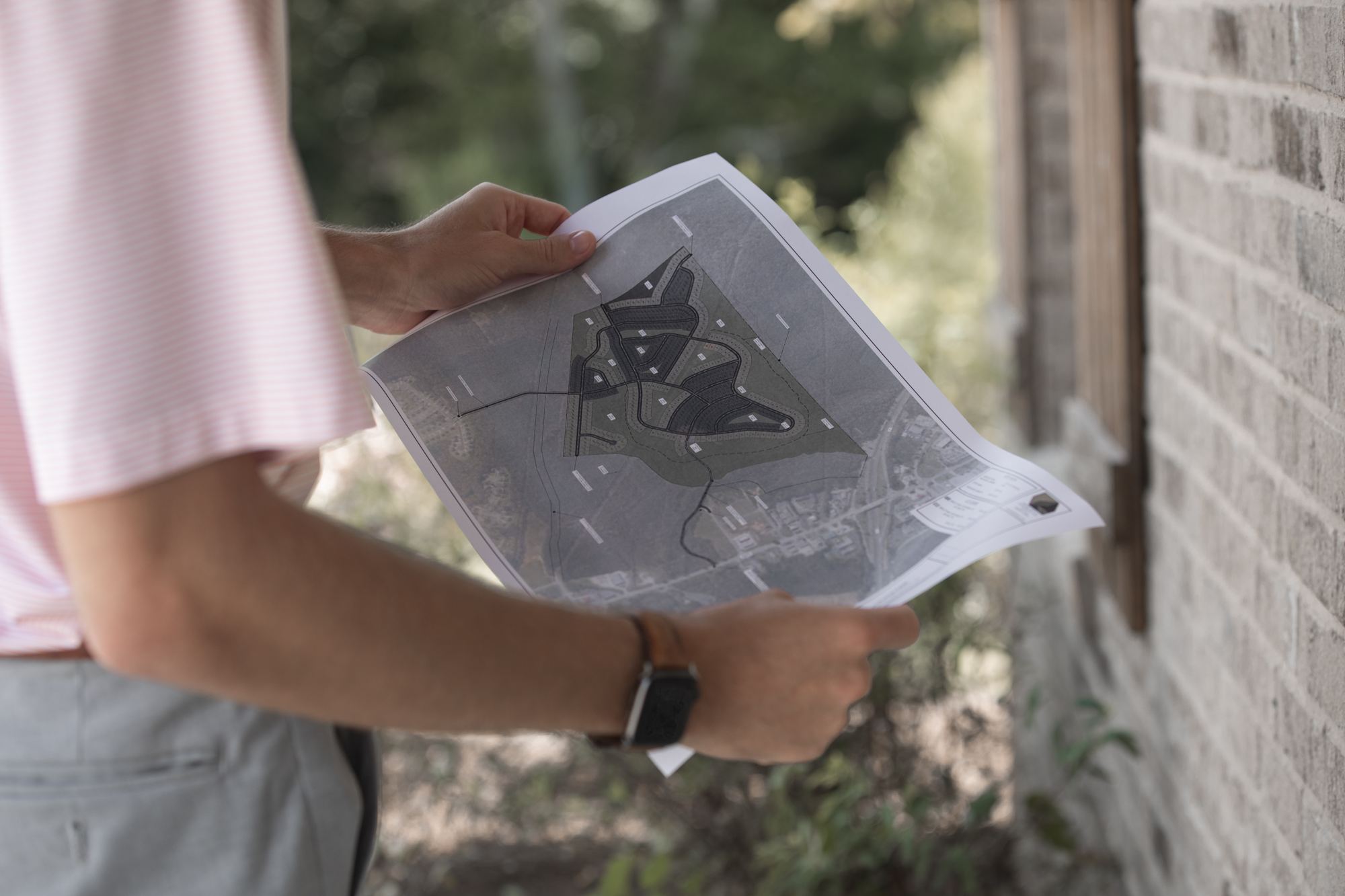
Any commercial project or subdivision in Auburn or Opelika moves through formal site plan review before a land disturbance permit is issued. Knowing what reviewers expect — and designing to it from day one — is the difference between one review cycle and three.
What a complete site plan includes
- Site layout — buildings, parking, access, setbacks, and buffers per the zoning district.
- Grading and drainage — existing and proposed contours, drainage patterns, and detention sized to local stormwater requirements.
- Utilities — water, sanitary sewer, and coordination with the serving providers.
- Erosion and sediment control — NPDES compliance and a practical plan the contractor can actually maintain.
- The survey underneath it all — an accurate boundary and topographic survey. Plans drawn on bad base data fail in the field no matter how good the engineering is.
How review works here
In Auburn, projects route through the Development Review Team (DRT) — typically 6–12 weeks from submittal to approval depending on complexity and response time to comments. In Opelika, the Land Disturbance Permit process generally runs faster, around 4–8 weeks. Both jurisdictions issue written comments; every round of comments you can avoid is weeks back on your schedule.
What triggers a second cycle
The usual suspects: detention that doesn’t meet the storm event requirements, missing utility coordination, incomplete erosion control, layouts that quietly violate a buffer or setback, and base surveys that don’t match record. None of these are exotic — they’re all preventable with internal QC before anything leaves the office, which is exactly how we run Core Design.
Start before the site plan
The cheapest review cycle is the one you never need. A pre-application meeting with the jurisdiction — Phase 2 of our Playbook — puts staff’s concerns on the table before design starts, so the site plan that gets submitted is the one they already expect to approve.